
Sikhism
The word Sikh means “disciple” or “learner”. A Sikh is, and always remains, a student of the meaning of life.
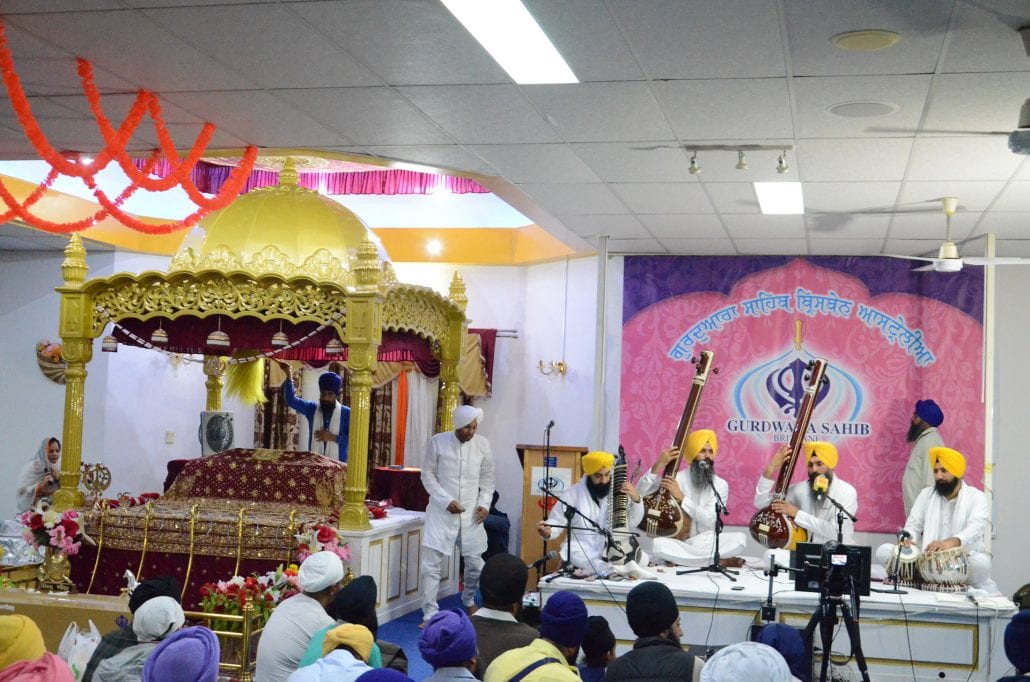
One God, and the equality of all people.
Sikhism was founded in Northern India in the fifteenth century by Guru Nanak Dev Ji, and is distinct from Islam and Hinduism. It is monotheistic, stresses the equality of all men and women, rejects caste and class, and emphasises service to humanity.
Sikhs keep their hair, beards and moustaches unshorn, and wear the turban to cover their hair and out of respect for God. The faith teaches the humanitarian principles of freedom, equality and justice.
The universal nature of the Sikh way of life reaches out to people of all faiths and backgrounds, encouraging us to see beyond our differences and work together for peace and harmony.
- ਨਾਮ ਜਪਣਾ Naam Japna Meditating on the name of God.
- ਕਿਰਤ ਕਰਨੀ Kirat Karni Earning a living by honest means.
- ਵੰਡ ਛਕਣਾ Vand Chhakna Sharing the fruits of one’s labour with others.
A five-hundred-year-old message of love.
With around 25 million followers, Sikhism is the world’s fifth-largest religion.
Guru Nanak spoke of a universal God, common to all humankind, not limited to any religion, nation, race, creed, colour or gender. Sikhism believes in one supreme Creator — free of gender, absolute, all-pervading and eternal.
Sikhism views life not as a fall from grace, but as a unique opportunity to discover and develop the divinity in each of us.
Human rights and justice are a cornerstone of Sikh belief. Sikh history holds countless examples of the Gurus and their followers making great sacrifices for religious freedom and justice.
Sikhs were among the most highly decorated soldiers of the British armed services in both World Wars, serving at El Alamein, on the Burma–China front and in the Allied assault on Italy. In India’s struggle for independence, over two-thirds of those sentenced to life imprisonment or death were Sikh — though Sikhs make up less than two percent of India’s population.
Vaisakhi 1699 and the birth of the Khalsa.
Guru Gobind Singh, the tenth Guru, summoned his followers to Anandpur in Punjab, and over 80,000 came. He appeared before them with a drawn sword and asked for a head. He repeated the call until five Sikhs, from different parts of India and different castes, stepped forward.
The Guru initiated these five — the Panj Pyare — into the new order of the Khalsa, and then, in a historic gesture, they in turn initiated him. That day he gave the Sikhs a unique identity, including five articles of faith.
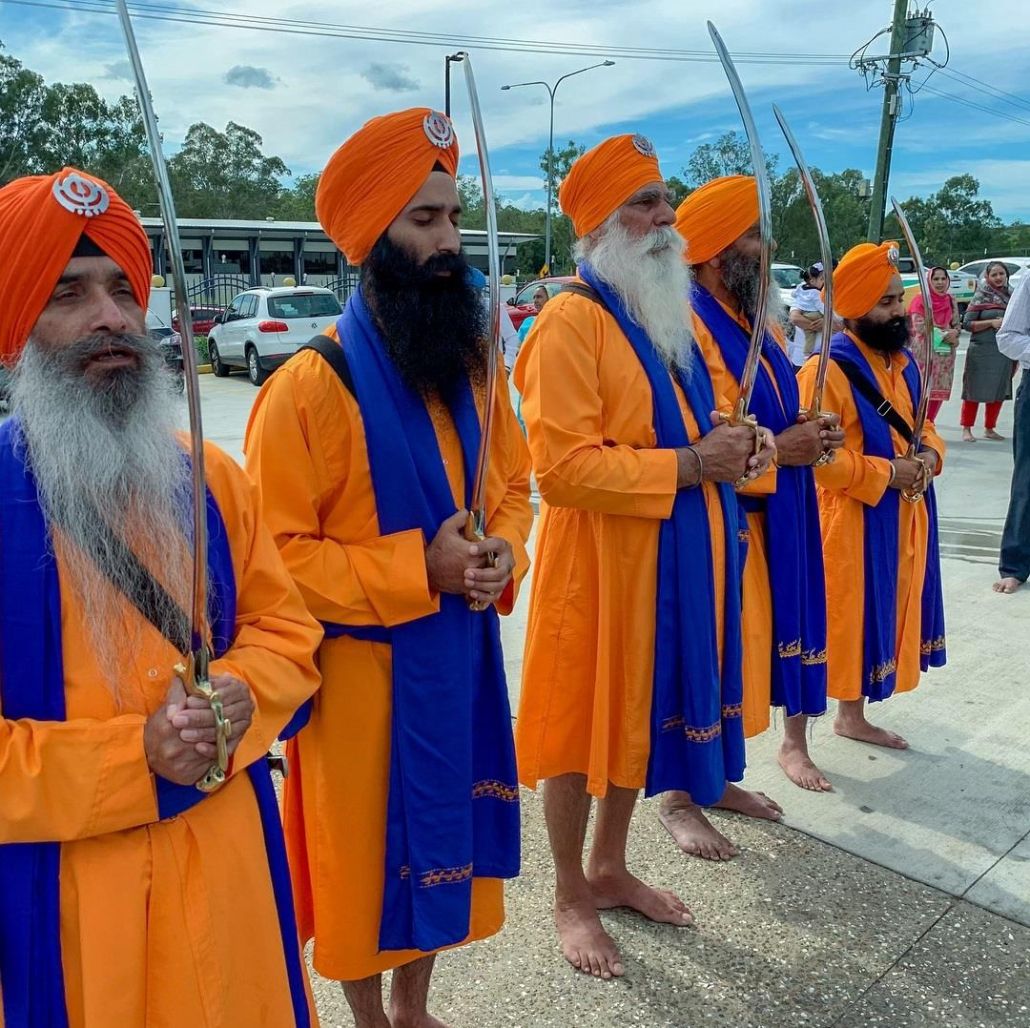
The five articles of faith
- ਕੇਸ Kesh Unshorn hair, a gift of God and Guru and a mark of Sikh identity.
- ਕੰਘਾ Kanga A small comb for the hair.
- ਕੜਾ Kara A steel bracelet: a reality with no beginning and no end, and a commitment to the ideals of the faith.
- ਕਿਰਪਾਨ Kirpan A sword, signifying resolve and commitment to justice.
- ਕਛਹਿਰਾ Kachera Knee-length breeches, in keeping with a disciplined way of life.
The turban
In traditional Indian society only high-caste men and the ruling elite wore turbans. By asking all Sikhs to wear one, Guru Gobind Singh declared every person noble. Sikh women follow the same symbols and conduct, and some also wear turbans. Young boys often cover their uncut hair, tied in a top-knot, with a simple cloth called a patka.
Singh and Kaur
In Indian society a surname revealed caste and status. Guru Gobind Singh freed Sikhs from this by giving all men the name Singh, meaning “lion”, and all women the name Kaur, meaning “princess”. Each year, Sikhs worldwide celebrate Vaisakhi to mark the formation of the Khalsa.
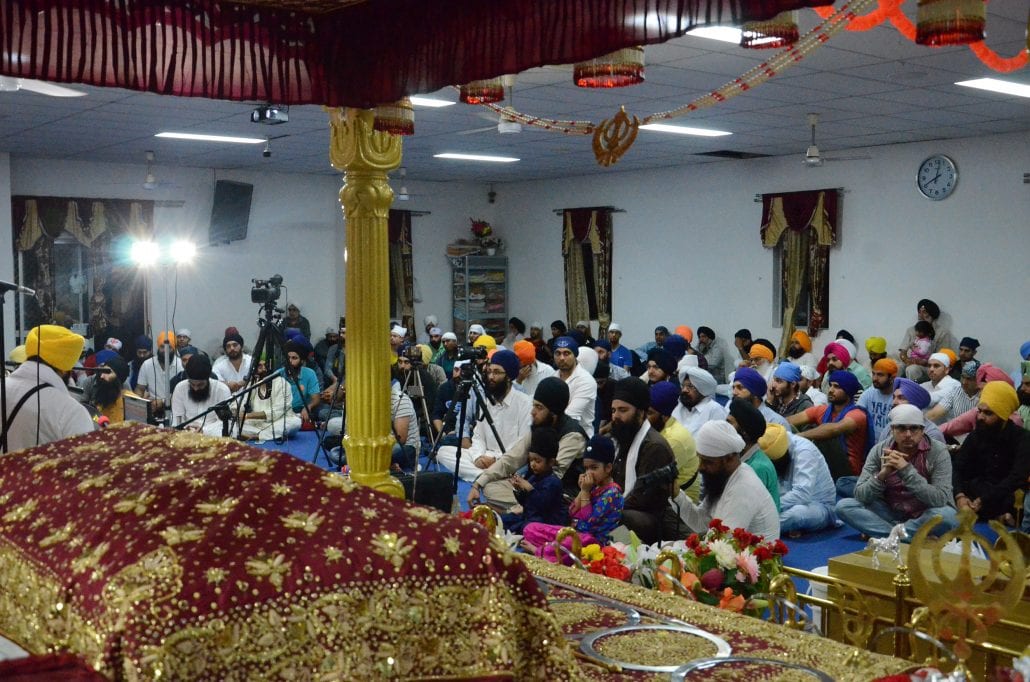
Sri Guru Granth Sahib Ji
Guru Gobind Singh ended the line of Gurus in human form. The writings of the Gurus, together with those of Hindu and Muslim saints whose teachings resonated with Sikh beliefs, form the Guru Granth Sahib — a uniquely ecumenical collection, and for Sikhs the repository of all spiritual knowledge and authority.
In worldly matters, authority rests with the Sikh community acting democratically and in mindful prayer. The word “Guru” is reserved for the ten Gurus, from Guru Nanak to Guru Gobind Singh, and the divine message in the Guru Granth Sahib.
More than a place of worship.
The Gurdwara has always been a refuge for the homeless and those in need. Visitors of any religion are offered shelter, comfort and food. Gurdwaras fly the Nishan Sahib, a saffron triangular flag bearing the Khanda, the symbol of the Sikh faith.
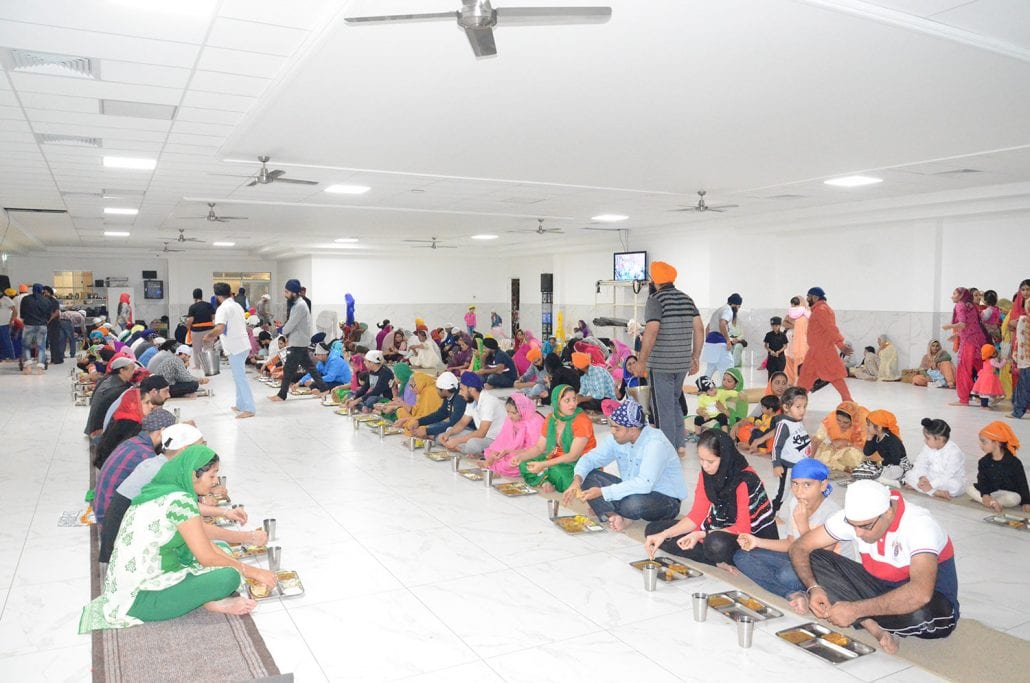
No seat is reserved for any dignitary — all are equal. Services include kirtan and the exposition of Sikh history, tradition and theology. The langar, run and funded by volunteers, asks everyone to sit side by side and eat together, breaking down barriers of caste and class.
Plan your visit →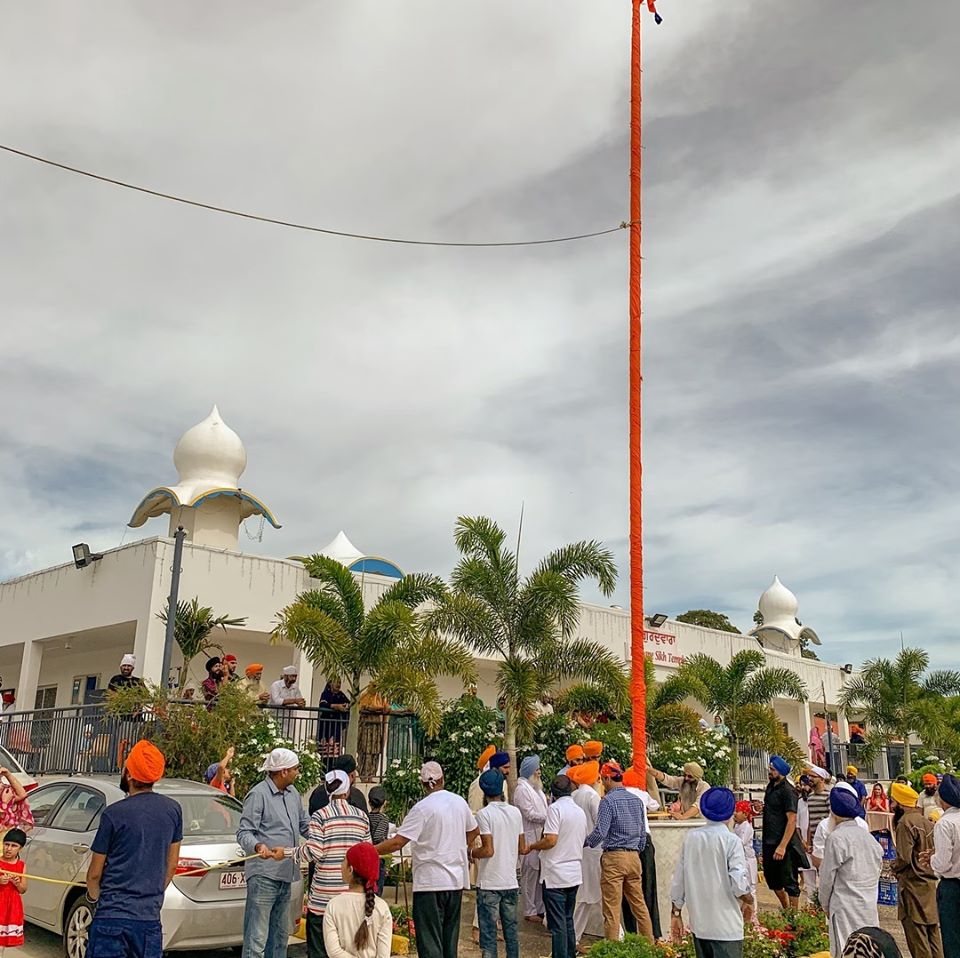
God is found not in isolation, but in family and community.
Sikhism is a practical faith. It emphasises a successful life as a householder and contributing member of society, with the mind attuned to God, and rejects all distinctions of caste, creed, gender, colour, race or national origin.
Living with a strong commitment to the world and humanity, guided by a firm spiritual foundation — the Sikh ideal is a perfect balance of the two.
Sikhs have no priestly hierarchy. In honour of the first five Sikhs of 1699, the voice of the community is channelled through five initiated Sikhs, chosen to resolve issues on its behalf. Sikhs believe God and Guru pervade the congregation when five Sikhs act in mindful prayer, making decisions a collective process.